
- Home
- Member Lounge
- Events
- Blog
-
Resources
-
Professional Development
-
 Research Articles Access Here
 -
 Courses View Courses Here
-
-
Community
-
Directories
-
 Member Directory Search Here
 -
 Organization Directory Search Here
-
- Log In
A Resource for the Client Who Cannot Sit Still or Concentrate
- Blog A Resource for the Client Who Cannot Sit Still or Concentrate
Every counselor who works with adults has met this client. He is bright. He is sincere. He wants to change. And he cannot hold a plan in his head long enough to act on it. She leaves your office with three good intentions and loses two of them in the parking lot.
ADHD does not stay in the session. It follows clients home, into their marriages, their inboxes, and their prayer lives. The fifty minutes we get each week are not enough. Our clients need something they can hold in their hands between sessions.
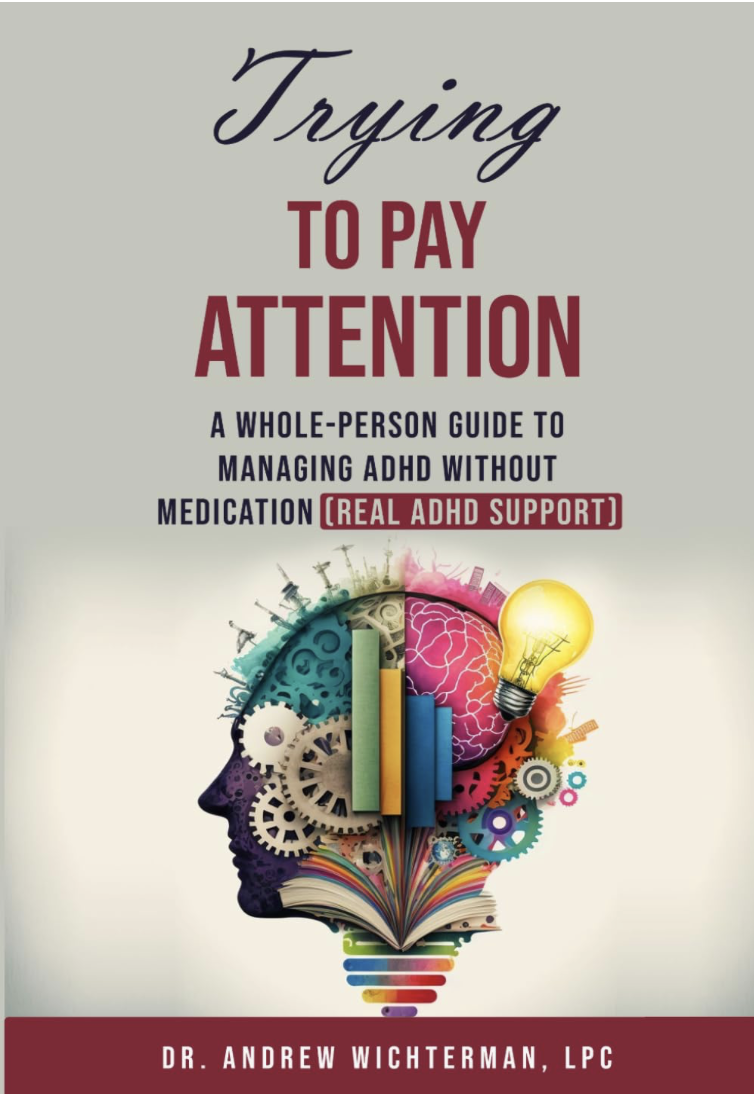
That is why I wrote Trying to Pay Attention: A Practical Guide to Managing ADHD Without Medication. Full disclosure up front: this is my book. I am recommending it because I built it to fill a gap I kept running into in my own practice — a plain-language, practical resource I could hand to adult clients without sending them to a 400-page clinical text or a blog post of dubious origin.
What the Book Is
Trying to Pay Attention is a practical guide for adults managing ADHD. It covers [BRIEF SUMMARY OF MAIN CONTENT AREAS — e.g., routines and environmental structure, time and task management, attention strategies, emotional regulation]. The chapters are short and skills-focused. [ONE OR TWO SPECIFIC EXAMPLES OF STRATEGIES OR CHAPTERS YOU WANT TO HIGHLIGHT.]
A word about the subtitle. "Without medication" describes the book's scope, not a position. I have written at length on this platform against frameworks that accept neurological diagnostics while rejecting physical interventions, and I am not joining them. Medication is a legitimate and often vital part of ADHD treatment. But many of our clients cannot access it, cannot tolerate it, or are not yet ready for it — and every client, medicated or not, needs behavioral and environmental skills that a prescription does not supply. This book addresses that layer of care.
How Counselors Might Use It
A few ways this fits clinical work:
As adjunct reading. Assign a chapter between sessions and process it together. The skills give you concrete homework, and the client's response to that homework gives you assessment data.
As psychoeducation for families. Spouses and parents often understand ADHD as a character problem. A short, accessible guide reframes it accurately without excusing the real damage untreated symptoms do to a household.
As a bridge for the reluctant client. Some clients will read a ten-dollar paperback before they will sit in a waiting room. The book is not a substitute for treatment, and it says so. But it can be a first step toward it.
If any of those fit a client on your caseload, the paperback is here.
A Theological Note
I did not write this book to tell anyone they are fine as they are. None of us are. The operative anthropology here is fallenness — all of us carry disorder, and the distractible mind is one form among many. What grace offers is not flattery but help: real means, ordinary disciplines, and honest work. Attention can be trained. Habits can be rebuilt. That conviction runs under every chapter.
You can access more information on my website www.drandrewwichterman.com
Trying to Pay Attention is the first book in the Real ADHD Support series. Get the paperback on Amazon — keep a copy on the shelf in your office.
If you use it with a client, I would genuinely like to hear how it lands. That feedback shapes what comes next in the series.
Disclosure: As an Amazon Associate I earn from qualifying purchases made through the link above.
Related Content



Comments